AI Agents That Pay for Themselves in 30 Days: 4 Patterns That Actually Work
Most AI agents do not pay for themselves. The ones that do follow one of four patterns. Here are the four, including what each costs, what each saves, and who each is for.

Most AI agents do not pay for themselves in 30 days. They cost money and produce slightly worse versions of work you were already doing. A small group of them do pay back. They follow one of four patterns. If your agent does not fit one of these, it probably is not earning its keep.
Here are the four. What each does, what each costs, what each saves, and what you should expect to see in the first 30 days.
#What "pays for itself" means here
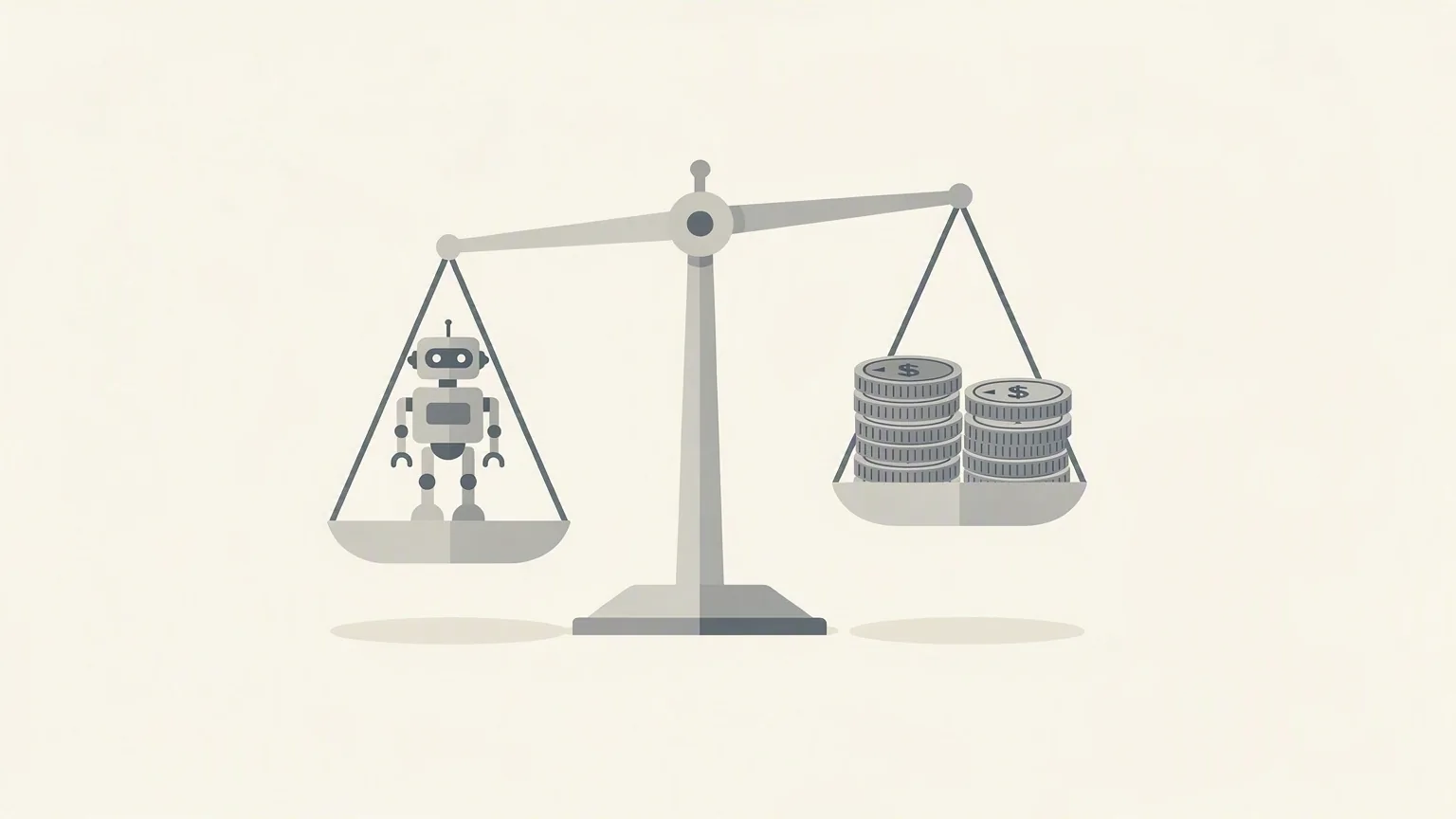
A working definition, so we are honest about it: an agent pays for itself in 30 days when the dollar value of the time, opportunity, or revenue it produces is greater than its all-in cost (subscription, AI compute, integrations, and the human hours spent reviewing it) within the first month.
Most agents people buy fail this test because they automate work that was not actually expensive in the first place. The patterns below all attack expensive work.
#Pattern 1: The lead-research agent
Job: Given a list of inbound leads or target accounts, research each one (name, company, role, recent activity, fit notes, suggested angle), and produce a one-page briefing the sales team can act on in 60 seconds.
Why this pays: Lead research is the most-skipped, highest-leverage activity in any sales pipeline. A human SDR can deeply research 4-6 leads an hour. An agent can deeply research 40-80, around the clock, for the cost of a few cents per lead.
What it costs (2026):
- Subscription or build: $200-1,500 per month
- AI compute: $0.02-0.10 per lead researched
- Setup: 5-15 hours in week one
What it saves:
- 10-25 hours per week of SDR or founder time, redirected to actual outreach
- A measurable lift in reply rate, because every cold email now has a specific hook
Who it is for: Any team with more than 50 inbound leads a month, or any team running outbound to a target list of 200+ accounts. Below those volumes, the human still wins.
30-day expectation: By day 15, briefings should be consistently usable without edits. By day 30, you should have a clear before/after on reply rate.
#Pattern 2: The inbound-support triage agent
Job: Read every incoming support email, ticket, or DM. Classify it (account question, billing, bug, feature request, escalation). Auto-reply to the easy 60-70%, route the rest to a human with a draft answer and the relevant context.
Why this pays: Most support volume is repetitive and most of it can be answered with information that already exists somewhere. A human spends 70% of their time on questions that should take 2 minutes and 30% of their time on the cases that actually need them. The agent flips that.
What it costs (2026):
- Subscription or build: $300-2,000 per month
- AI compute: $0.05-0.30 per ticket handled
- Setup: 10-30 hours in week one (training on your knowledge base)
What it saves:
- 50-70% of first-response time across all tickets
- 20-40% of total support hours, freed for higher-value work
- A real improvement in customer-side response time, which usually shows up in NPS within 30 days
Who it is for: Any business handling 50+ support tickets a week with a small team. SaaS, e-commerce, and any service business with recurring customer questions.
30-day expectation: By day 10, easy tickets should be auto-resolving accurately. By day 30, the team should feel the change in their queue.
#Pattern 3: The content-drafting agent
Job: Produce first drafts at scale. Blog posts, social posts, weekly recaps, lead-magnet outlines, sales enablement one-pagers, internal updates. The human edits and ships. The agent never writes the final version, only the foundation.
Why this pays: First drafts are the part of content work that takes 70% of the time and produces 20% of the value. Editing a decent draft is fast and creative. Staring at a blank page is slow and demoralizing. An agent handles the cold start.
What it costs (2026):
- Subscription or build: $200-800 per month
- AI compute: $0.30-2.50 per article draft
- Setup: 5-20 hours to train it on your voice
What it saves:
- 60-80% of the time-to-draft on routine content
- A real ability to publish more often without burning out the team
- Better consistency, because the voice is held in a prompt instead of in a junior writer's head
Who it is for: Any business where content is a growth lever (newsletters, blogs, social, podcasts) and the bottleneck is volume, not quality. Not for high-stakes, brand-defining pieces. Use it for the 80% of content that needs to exist on a schedule.
30-day expectation: By day 14, first drafts should be 70% there. By day 30, your publishing cadence should be visibly higher.
#Pattern 4: The outbound follow-up sequencer
Job: For every warm lead that goes quiet, run an intelligent multi-touch follow-up sequence. Reference the actual context of the previous conversation, propose specific times, escalate to the human only when the lead responds or when the sequence runs out.
Why this pays: Most pipeline death is silent. A prospect goes quiet, the SDR is busy, three weeks pass, the deal is dead. An agent keeps the sequence warm without forgetting, with relevant follow-ups that do not read like spam.
What it costs (2026):
- Subscription or build: $200-1,200 per month
- AI compute: $0.10-0.50 per follow-up sent
- Setup: 5-15 hours to wire it into your CRM
What it saves:
- 5-15% recovery rate on previously-dead deals (industry rough)
- A material uplift in pipeline conversion, because warm leads stay warm
- A founder or AE no longer feeling guilty about all the leads they meant to follow up on
Who it is for: Any team running a sales motion with more than 30 active conversations at a time. Below that, manual works.
30-day expectation: Within the first cycle, you should see at least one "I thought this was dead" deal come back. Within 30 days, you should be able to draw the trend line on pipeline retention.
#The pattern behind the patterns
If you compare the four, the same shape repeats:
Find work that is high-volume, judgment-light, and currently being skipped or done badly. Put the agent on it. Keep humans on the judgment-heavy 10% where they actually move the needle.
Agents that try to be a fifth member of a five-person team rarely pay back. Agents that absorb a class of work the team was going to skip anyway almost always do.
#What does NOT pay for itself
So you know what to avoid:
- Replacing a senior employee with an agent
- Automating a low-volume task to look more "AI-powered"
- A general-purpose "AI assistant" with no specific job
- Anything where the human review takes longer than the work would have taken from scratch
If you cannot say in one sentence what the agent is for and how many actions it will do per week, do not buy it yet.
#How to size your first agent
A simple test before you spend a dollar:
- Pick the one task on your team that nobody likes doing, that gets done badly, and that you wish was done more often.
- Estimate how many times per week that task happens.
- Multiply that by what an hour of the responsible person is worth.
- If the number is over $1,500 a month, an agent for that task probably pays for itself.
That is the entire framework. Anything more complicated is usually a pitch.
If you want help mapping which of the four patterns fits your business and standing up the agent that does the work, that is what we do.